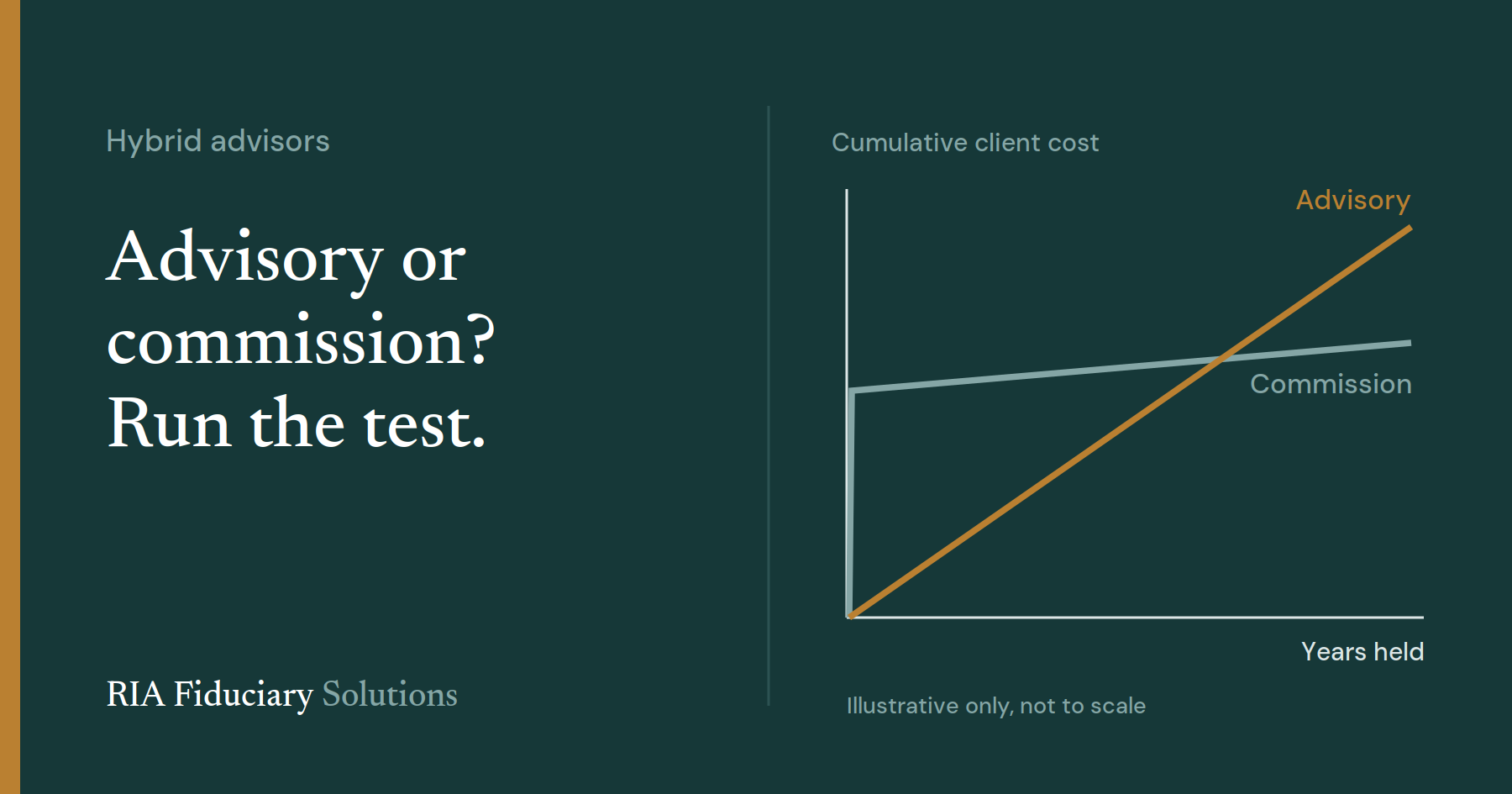
- Advisory-class annuities fit when you’ll give ongoing advice on the asset. A recurring fee on an asset you won’t manage is hard to justify.
- Compare total cost over the client’s expected holding period, not product expenses alone.
- Watch for double compensation, and write down why you chose the structure you did.
Dual-registered advisors have a choice fee-only RIAs don’t. The same client need can often be met with a commission-based annuity through the brokerage side or an advisory-class annuity billed through the advisory side. Regulators know this, and they’ve paid close attention to how dual registrants choose between account types.
Neither structure is better in general. Each one is better for particular clients. These five questions help you decide case by case and leave a clear record of why.
1. Will you give ongoing advice on this asset?
If you’ll rebalance subaccounts, manage withdrawal timing, monitor rider values, and fold the contract into regular reviews, an advisory structure matches the work. If the contract is a set-and-hold fixed product with nothing to manage for years, an ongoing fee is much harder to justify.
2. How long will the client likely hold it?
A commission is paid once, at the start. An advisory fee repeats every year. Over a long, hands-off holding period, the fees can add up to more than the commission would have been. Over a shorter or actively managed period, the advisory version may cost the client less. Run both over the client’s realistic timeline.
3. What does the full cost look like?
A commission-based contract builds distribution costs into its expenses and often carries a longer surrender schedule. An advisory-class contract typically has lower product costs and a shorter surrender schedule, or none, plus your advisory fee on top. Compare the totals, not the components.
4. Has anyone already been paid on this money?
If the funds come from a recently commissioned product, putting them under an advisory fee can look like being paid twice on the same dollars. Moving a buy-and-hold client into a fee structure with no added service raises the same concern. Look back at the money’s history before you pick a structure.
5. Can you explain the choice in one paragraph in the client file?
If you can state plainly why this structure serves this client, based on the four answers above, you have your documentation. If you can’t, revisit the recommendation.
Client A is 62, plans to start income in about five years, and wants an annuity with investment options you’ll allocate and rebalance until then. Ongoing advice is real and expected. An advisory-class contract is likely the better fit.
Client B is 68 and wants a fixed annuity to hold untouched for a decade as a safe reserve. There’s little to manage. A structure without a recurring fee on the asset may serve this client better.
These examples are hypothetical and for illustration only. They do not represent actual clients, and the right structure for any client depends on their full circumstances.
How RIA Fiduciary Solutions helps
We work with hybrid advisors and can model advisory-class and commission-based versions of a case side by side, with total costs over the client’s timeline, surrender schedules, and guarantees laid out. You make the call, and you have the comparison for your file.
If the client already owns an older contract, start with the six rider values to check before any exchange.
Send us the client situation. We’ll lay out the advisory and commission options side by side, with total cost and trade-offs, so your recommendation and your file both hold up.
Request a side-by-sideQuestions advisors ask
Is an advisory-class annuity always cheaper for the client?
No. Advisory-class contracts usually have lower product costs, but your advisory fee recurs every year. Over a long, hands-off holding period, total cost can be higher than a commission-based contract.
Can I move an existing commission annuity into advisory billing?
Sometimes, but review how recently the contract was commissioned and whether you’ll provide ongoing advice on it. Billing a fee on assets that already paid a commission can raise double-compensation concerns.
Which standard applies to my recommendation?
Brokerage recommendations fall under Regulation Best Interest and state annuity suitability rules. Advisory recommendations fall under your fiduciary duty as an investment adviser. Document the one that applies.